
Runes as a living path: the nature of the tradition and its promise
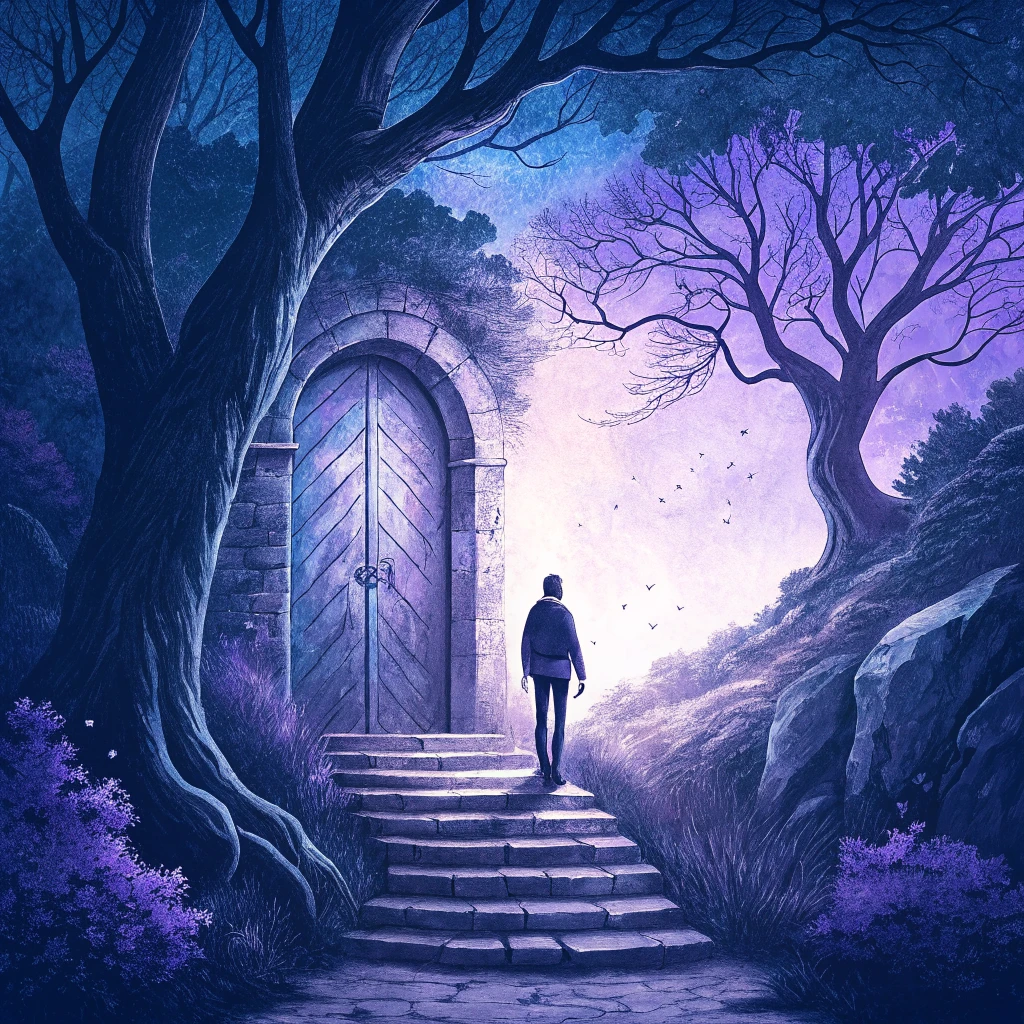
Runes as a living path: the nature of the tradition and its promise
Before touching any single rune, before learning to draw or sound them, it is important to understand what kind of tradition we are dealing with. This question is not a formality. How a person understands the runes from the very beginning determines what the entire path ahead will become for them. If the runes are perceived as a set of symbols with interpretations, the path will be reduced to reading manuals and pulling rune stones from a bag. If the runes are perceived as a fashionable stylisation of antiquity, the path will be reduced to an aesthetic game that leaves no trace in life. But if the runes are perceived as a living path, then the possibility of genuine inner transformation opens up. The first lecture is devoted to precisely this distinction.
Three ways of approaching the runes
There are three principal ways in which a modern person encounters the runes, and each of them yields a different result.
The first way: runes as writing. In this approach the runes are simply an ancient alphabet of the Northern peoples, a historical fact, an object of academic study. This approach is legitimate within its sphere, it is important for philology and history, but it entirely bypasses the inner dimension of the tradition. A person who stops at this level knows what the runes looked like and where they appear, but has no personal experience of their power. It is like learning musical notation without ever playing a single melody.
The second way: runes as a system of divination. In this approach the runes are an instrument for obtaining answers to life questions. A person draws a rune, looks in a manual, receives an interpretation. This approach yields a quick result and for this reason is the most widespread today. However, it has two serious problems. The first problem is that it reduces a rune to its semantic meaning and ignores the three other layers in which a rune carries its weight: its form as a drawn or inscribed sign, its sound as a phoneme that can be vibrated, and its name as a complete archaic word. The full treatment of these four layers (form, sound, name, meaning) is the subject of the ninth lecture and the three that follow it. Here it is enough to mark that a rune approached only as a meaning to be looked up has been three-quarters lost before the looking up begins. The second problem is that it makes the practitioner passive: the rune "says" something, the person "listens", but no inner work with the force of the rune takes place. As a result, the runes remain an external instrument and do not become part of the path.
The third way: runes as a path of inner transformation. In this approach each rune is a living force with which the practitioner establishes a relationship. Working with a rune is not reduced either to knowing its history or to reading interpretations. It presupposes living it through, entering its field, allowing its qualities to mature in one's own body and consciousness. This path is longer and more demanding than the first two, but it is precisely the one that corresponds to what the runes are in the deep tradition. The series of posts to which this lecture belongs is oriented to this third way.
What the runes are and what they are not
Now it is possible to formulate this more precisely. The runes are not magical signs in the sense in which this word is used in popular culture (as a way of "influencing reality" by external means). The runes are not a system of divination, although divination is one of the possible ways of working with them. The runes are not a religion and not a cult, although in the Northern tradition they are connected with a particular religious worldview. The runes are not a national symbol in the narrow sense, although they arose within a concrete cultural setting.
The tradition tells its own founding story about how the runes came to be received, and the story is bodily, not intellectual. In a section of the Hávamál known as the Rúnatal, the supreme god of the Northern pantheon describes how he hung for nine windswept nights on a tree, wounded by a spear, given to himself by himself, without bread and without a drink from a horn, until at the extreme of the ordeal he took up the runes with a cry and fell back from the tree. The next lecture will set this fragment inside the wider source-record. For the opening framing only one thing matters about it: the runes are not received as information that can be learned from a manual but as the outcome of an inner ordeal that changes the one who undergoes it. Everything later in the path rests on this orientation.
What, then, are they. The runes are the language by which the world speaks of itself. Each rune is at once a sign, a force, and a key. A sign, because it has a form, a sound, a name, and a field of meanings. A force, because it denotes not an abstract concept but a living principle that acts in the world and in the human being. A key, because it grants access to a particular layer of reality that without it remains closed. The twenty-four runes of the Elder Futhark together form a complete map of the world and a complete map of the experience of the human being who walks the path.
A qualification is in order here, because a careful reader at the opening of the path may hear this last sentence as a historical-philological claim. It is not. Philology can tell us when and where the row was attested. The Kylver Stone, around the year four hundred, gives the earliest complete listing of the twenty-four runes. The Vadstena bracteate, about a century later, gives the same row with the three ættir-divisions visible on its face. What philology can attest is the dating and the inscription. It cannot decide for the tradition what its row signifies. The claim that the twenty-four runes form a complete map of the world and of human experience belongs to how the tradition has understood itself across its centuries of transmission, and the rest of this course is built on that self-understanding. The practitioner is asked to hold the claim as the tradition holds it rather than as an outsider's verdict.
This formulation may seem too abstract. It will become more concrete when we come to the individual runes in the initiations. For now it is important to fix the general principle: a rune is not a sign of something else (the way a letter is a sign of a sound), it is itself what it denotes. Sign, force, and meaning are not separated in a rune. This is precisely why one cannot work with the runes only intellectually, as with concepts. They must be approached as a whole.
This triad (sign, force, and key) is the first technical formula the practitioner is asked to hold and to carry forward. It will be unfolded in the third block of the theory cycle, where the language by which the runes speak is treated in four layers: form, sound, name, and meaning. It will be returned to whenever a rune is approached in the initiations. Sign, force, and key are not three things stacked one beside the other but three aspects of the one rune. The work consists in approaching the rune so that all three are addressed at once, rather than only one of them in isolation. The reader is asked to fix this triad in mind now, because the rest of the path will assume it as a foundation already in place.
What the runic path promises
No honest path promises everything at once. For that reason it is important to say clearly what the runic tradition gives and what it does not.
What it gives. First, contact with one's own fate. Not in the sense of predicting the future, but in the sense of a clear seeing of those forces that shape a person's life from within and from without. The tradition has its own layered vocabulary for this, naming the layers as Orlog (the substrate of past deeds), Wyrd (the woven pattern of the present), and Urd (the moment of action in which the two meet). The eighth lecture unfolds this teaching in full, and the present lecture names it only as forward reference. Second, access to bodily and ancestral memory. Working with the runes often awakens what has been forgotten: bodily reactions, inherited dispositions, and the like. Third, instruments for working with concrete tasks of life: making decisions, passing through crises, building relationships, creativity, and the sober repair of the practitioner's relation to body and kin. The work is not therapy and does not substitute for it where therapy is needed, and the thirteenth lecture states this guard explicitly. The promise here is more modest and more particular: the runes give the practitioner instruments by which the lost layers of experience the section on the modern person will name can be restored as living connections. Fourth, and this is the most important, the gradual transformation of the practitioner himself: the runes do not remain outside, they become part of the inner structure of the person who works with them.
What it does not give. It does not give a quick result. The first signs of serious work appear after months, and deep changes only after years. It does not give ease: living through certain runes is accompanied by crises that one must be ready to endure. It does not give a closed system of answers to all questions: the runes pose questions more often than they answer them. It does not give a sense of being chosen: the runic path does not make a person spiritually superior to others, it makes them more alive, more conscious, more present in their own life.
Why this tradition is still alive
Many ancient traditions have survived only as historical material. The runic tradition belongs to the few that continue to work in the present day. This is not accidental. The reason is that the runes are not bound to any particular historical situation. They describe those layers of reality that do not depend on the epoch: the elements, fate, kin, body, consciousness, force, death, transformation. All of this is present in the life of a modern person just as it was present a thousand years ago. The outer forms of the tradition have changed, but the core remains the same.
A qualification is in order at this point, and the next lecture will unfold it in detail. Contemporary runic practice is in the main a deliberate revival, not an unbroken folk transmission. Pockets of folk-magical continuation survived in Iceland and in isolated rural areas of Sweden and Norway into the nineteenth and even the twentieth century, but the systematic working tradition that present-day practitioners enter was rebuilt from the late nineteenth century onwards on a base of philological recovery, the recorded sources (the runic poems, the Eddic material, the sagas), and the inner work of those who took up the tradition again. To say that the tradition is alive in the present is therefore not to claim that it was passed down unbroken. It is to say that what it works with (the layers of reality named above) is still present, that the recorded sources are sufficient to ground a serious approach, and that the work itself, performed with discipline, returns the same effects in the present that the sources describe.
The second reason is that the runic tradition has an inner structure that allows a person to proceed step by step. The twenty-four runes are divided into three ættir, and the word ætt is itself an Old Norse term for kin or clan, so the structural division of the row carries kinship vocabulary in its own name. The fourth lecture unfolds the inner architecture of the three groups in detail. Taken together, the ættir form a natural sequence of living-through, in which each subsequent step rests on the previous one. This is not a random set of symbols but a constructed road. It is precisely for this reason that the path of initiations with the runes is possible: there is a sequence, there is a logic, there are checkpoints.
What the runic path can give the modern person
The modern person lives in an environment that is cut off from those layers of reality with which the runes work. The connection with the body is weakened, the connection with kin is often broken, the connection with the elements has been replaced by the connection with technology, the connection with fate has been replaced by the illusion of full control over life. In such an environment a person often feels something that is hard to name: a certain emptiness, a certain loss of support, a certain sense that life is passing by. Not all people feel this with the same sharpness, but many recognise this description.
The runic tradition does not solve these problems in any "miraculous" way. It gives instruments by which a person can restore for themselves those layers of experience that were lost. Not as nostalgia for the past, but as a restoration of a living connection with what is always present but has become imperceptible. The body again becomes sensitive. Kin again becomes a support. The elements again become reality and not metaphor. Fate again becomes not a verdict but a living current in which a person can act consciously.
A further word is in order about what this restoration actually feels like, so that the reader does not expect the wrong thing. It is not a flush of expanded awareness, not a dramatic vision, not an immediate sense of having recovered something lost. It is, much more often, a slow recovery of register: a noticing of weather and posture and breath that the practitioner had stopped registering, a re-emergence of inherited dispositions that become legible rather than merely suffered, an arrival of moments in which the layered character of fate becomes apparent in concrete decisions, a steadier presence in the ordinary tasks of the day. The dramatic image is rarely the sign of contact, and the steadier register is. The thirteenth lecture will return to this point in detail when it sets out the strata of body, kin, and memory in which the runes actually arrive. For the opening framing it is enough to say that the practitioner who waits for fireworks waits for the wrong thing, while the practitioner who watches for the steadier register finds what the work actually gives.
How to approach the series of lectures
A few practical remarks for those who are beginning this path. First: do not hurry. The lectures are built so that each preceding one prepares the next. To skip is to lose support. Second: do not try at once to apply theoretical knowledge as practical instructions. This post and the other lecture posts provide the theoretical field without which practice will be haphazard, but they are not themselves practices. The practices will come later, in the initiations. Third: write down your own reactions to the lectures. Some themes will provoke resistance, others will provoke recognition. Both are valuable information about your own point of entry into the tradition.
As a first introductory action that you can already take now, try the following. Sit in silence, without any external instructions, for between five and fifteen minutes, and simply ask yourself: "What brought me to the runes. What am I expecting from this path. What am I afraid of." Do not look for quick answers. Just pose these questions and listen for what comes in reply from the body, not from the head. The duration matters less than the steadiness. What is being asked is not insight but honesty about motivation, and the practitioner will know they have it when the answers stop changing on re-asking. This is not a practice in the strict sense, this is a way of making your own motivation visible to yourself. Strong and honest motivation is the first support on the path. Without it no technique will work.
Typical misunderstandings
Before concluding the lecture, it is worth warning against a few common misunderstandings. The first misunderstanding: the runes are something national or ethnic, and only those with the corresponding roots may engage with them. This is not true. The runic tradition arose within a particular cultural setting, but describes layers of reality that are universal. Any person who is ready to walk the path honestly can work with the runes. A fuller treatment of this point belongs to the fifteenth lecture, which addresses the historical appropriation of runic symbolism by twentieth-century political movements as one of the characteristic dangers of the path. For the opening framing it is enough to state directly that the runic tradition is many centuries older than the movements that misused its symbols, that it has never been the property of any ethnic or political position, and that the practitioner who encounters runic symbolism inside such a frame is meeting a contamination of the tradition rather than its substance. The second misunderstanding: the runes are a dangerous magic that can harm the careless. There is a partial truth in this (incorrect work with powerful forces can indeed have consequences), but the runes themselves are not evil or aggressive forces. What can be dangerous is the stance of the practitioner (inflation, haste, unethical motivation), not the runes themselves. The third misunderstanding: it is enough to read about the runes and memorise their meanings in order to become a connoisseur. This is the most widespread and the most harmful misunderstanding. Knowledge of meanings without a personal experience of living through them gives nothing but the illusion of understanding.
Connection with the wider path
The runic tradition does not exist in a vacuum. Within the school it takes its place alongside the other traditions taught across its paths. Each of these traditions works with its own aspect of reality and with its own mode of transformation. Buddhism, for instance, provides work with consciousness and its states. The Theosophical tradition provides a map of the subtle levels of being. The Hermetic tradition provides the laws by which the world acts. The Toltec tradition provides a seeing of the energetic nature of the human being and the world. The runic tradition adds to this the connection with concrete fate, with embodiment, with kin, with the elements, and with the forces that act in a person's life here and now. It has, additionally, its own short wisdom text in the Hávamál, the closing sections of which give the runic material proper. The inner conduct counsels precede the runic stanzas in the text itself, and the fifteenth lecture will return to that ordering as one of the structural facts of the tradition. None of these traditions replaces the others. They complement one another, and the full path presupposes the gradual mastery of each. This will be examined in more detail in the final lecture of the series.
At this stage it is important only to understand that runic work is not isolated. It rests on the achievements of the other traditions and prepares for them. If a person already works with attention in the Buddhist tradition, runic practice will be deeper. If a person already sees the subtle layers of reality in the Theosophical or Toltec tradition, the runic forces will be more tangible for them. And conversely: runic work prepares the body and consciousness for those practices that are represented in the other traditions.
Conclusion
The first lecture had a single principal aim: to establish the right approach to the runes from the very beginning. If you have read this post and felt that the runes are something more than symbols with interpretations, the first support has been laid down. Everything that follows will unfold this support. The triad of sign, force, and key, the founding Eddic narrative of the Rúnatal, the layered fate-vocabulary of Orlog, Wyrd, and Urd, the structural division of the row into three ættir, and the qualification that the contemporary stream is a deliberate revival rather than an unbroken folk transmission are the orienting points the rest of the path will assume as foundation already in place. The next lecture is devoted to how the runic tradition has come down to us across the centuries, what sources are at our disposal, and how to work with them without falling either into literalism or into fantasising. This is the historical and methodological grounding without which the subsequent lectures on cosmology, the elements, and fate would not be sufficiently disclosed.